
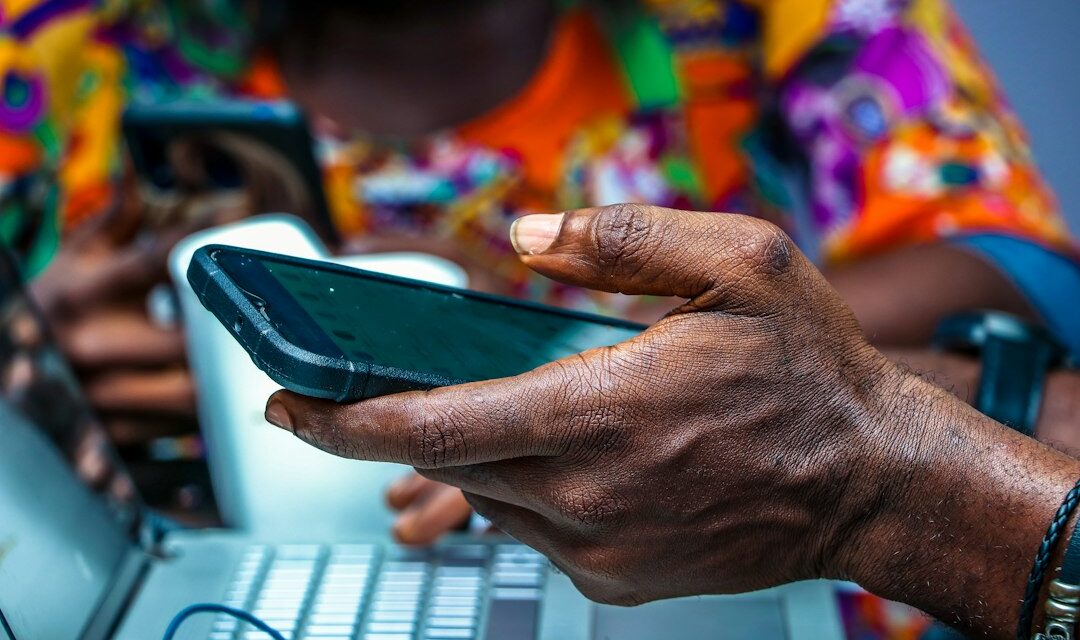
In Nigeria, everyday transfers, QR payments and utility bills increasingly go through mobile wallets such as OPay, PalmPay and Moniepoint. OPay was founded in 2018 by Opera, whose parent is Shenzhen-listed Kunlun Tech, and PalmPay is backed by Transsnet, a joint venture of Transsion and NetEase, so two of the three biggest names have Chinese roots.
Whether a foreigner can use them fully comes down to KYC tiers. A Tier 1 wallet needs only a phone number plus a BVN or NIN, but its limits are low; higher tiers need a BVN, a NIN, ID and proof of address. This guide covers who is behind each platform, the KYC tier limits, and how foreigners get a BVN and NIN.
CBN KYC tiers for mobile wallets
| Tier | Daily limit | Max balance | Needs |
|---|---|---|---|
| Tier 1 | ₦50,000 | ₦300,000 | Phone + BVN or NIN |
| Tier 2 | ₦200,000 | ₦500,000 | BVN + NIN + ID |
| Tier 3 | ₦5,000,000 | 不限 / No cap | Full KYC incl. address |
Key points
- OPay: founded in 2018 by Opera, which is owned by Kunlun Tech (listed in Shenzhen); Opera held about 9.5% of OPay in 2023.
- PalmPay: founded in 2019; Transsion led its $40 million seed round with NetEase. It holds a CBN mobile money operator (MMO) licence and reported over 35 million registered users in 2025.
- Moniepoint: founded in 2015, focused on merchant POS and business banking, operating as a microfinance bank; investors include Visa and Google’s Africa Investment Fund.
- In January 2026 the CBN upgraded Moniepoint MFB, OPay, PalmPay and others from regional to national licences.
- CBN tier limits (2017): Tier 1 ₦50,000 a day and ₦300,000 balance; Tier 2 ₦200,000 and ₦500,000; Tier 3 ₦5 million a day with no balance cap.
- Since March 2024, individual accounts and wallets without a BVN or NIN are restricted.
The three big platforms
OPay
Opera launched OPay in Nigeria in 2018. Opera itself is controlled by Kunlun Tech, a company listed in Shenzhen. OPay has since raised about $570 million, diluting Opera’s stake to about 9.5% by 2023. It is known for free or cheap transfers and a huge agent network: about 10 million daily active users in 2024 and more than 500,000 agents by 2023.
PalmPay
PalmPay started in 2019 and is headquartered in Ikeja, Lagos. It is backed by Transsnet, the joint venture of Transsion (maker of Tecno, Infinix and itel phones) and NetEase; Transsion led its $40 million seed round. PalmPay operates under a CBN mobile money operator licence and in 2025 reported more than 35 million registered users and about one million SME clients. Because Transsion phones are so common in Nigeria, many new handsets come with PalmPay preinstalled.
Moniepoint
Moniepoint, founded in 2015, is one of Nigeria’s largest merchant-acquiring and agent-banking providers, with more than 300,000 POS agents and 5.2 billion transactions processed in 2023. It operates as a microfinance bank (Moniepoint MFB), and its investors include Visa, Google’s Africa Investment Fund and British International Investment. Many of the POS terminals you see in markets and shops are Moniepoint’s.
NIBSS data put mobile money transactions at ₦20.71 trillion in the first quarter of 2025. In January 2026 the CBN upgraded Moniepoint MFB, OPay, PalmPay and others to national licences, and in June 2026 it issued new market-structure and anti-money-laundering rules requiring fintech groups to ring-fence each licensed business and report market share monthly.
KYC tiers and limits
The CBN applies tiered KYC to bank accounts and wallets. The CBN’s 2017 framework is below; each provider sets its own limits within it:
| Tier | Daily transaction limit | Maximum balance | Usually required |
|---|---|---|---|
| Tier 1 | ₦50,000 | ₦300,000 | Phone number + BVN or NIN |
| Tier 2 | ₦200,000 | ₦500,000 | BVN + NIN + ID |
| Tier 3 | ₦5,000,000 | No cap | Full KYC including address verification |
A CBN circular of December 2023 requires Tier 1 accounts and wallets to have a BVN or NIN, and Tier 2 and 3 to have both. From 1 March 2024, non-compliant accounts were placed on “post no debit or credit”. Some apps, including OPay, also temporarily lower transfer limits for 24 hours after you log in on a new device. Always check the current limits in the app.
How foreigners get a BVN and NIN
BVN (Bank Verification Number): every bank account holder needs one, and foreigners can enrol at any Nigerian bank branch, which captures fingerprints and a photo. To open the account itself, banks normally ask for your passport, residence permit (CERPAC) and proof of a Nigerian address.
NIN (National Identification Number): under section 16 of the NIMC Act, foreigners legally resident in Nigeria for two years or more must register for a NIN, using their passport, residence permit and BVN. Shorter-stay foreigners are exempt. SIM cards must also be linked to a NIN, though visitors can register a SIM with their passport.
The usual order is: get your residence permit, open a bank account and enrol for a BVN, register for a NIN, then use your BVN and NIN to upgrade your wallet tier. Our STR visa and CERPAC guide covers the residence permit, and our naira exchange and banking guide covers bank and domiciliary accounts.
Everyday uses
Shops, restaurants and market stalls widely accept bank transfers or POS card payments, and many vendors simply give you an OPay, PalmPay or Moniepoint account number to transfer to. You can also pay for airtime, data, prepaid electricity meters and TV subscriptions inside the wallet apps. Many people use transfers to pay drivers, cleaners and casual workers because it leaves a record, while formal payroll should still go through a bank with PAYE deducted.
Practical tips
- Use wallets for everyday spending; keep salary, savings and company money in a bank account.
- Check the recipient’s name before every transfer. Scammers pose as customer service, couriers or “staff” to get codes; no platform will ask for your PIN or OTP.
- Turn on the app lock and transaction PIN, and call the provider immediately if your phone is lost.
- Cash withdrawals are capped by the CBN at ₦500,000 per week for individuals, so plan any cash needs.
- Avoid making large transfers on your phone in public places; see our Nigeria security guide for more.
Mobile money and betting
Many sports betting sites in Nigeria accept deposits through OPay, PalmPay and Monnify (part of the Moniepoint group). Betting is for adults 18 and over and is regulated by each state; since February 2026 Lagos withholds 5% tax on online winnings and asks for your NIN at payout. An advocacy group has criticised some finance apps for promoting betting inside the app, so set your own budget and use licensed operators only. Our guide to gambling in Nigeria summarises the law by state, and our guide to paying with OPay and PalmPay at betting sites covers deposits and withdrawals.
Sources
- TechCabal: Opera raises OPay stake to 9.5% (2023)
- Quartz: Transsion’s PalmPay raises $40m with NetEase (2019)
- Wikipedia: PalmPay
- TechCabal: Visa invests in Moniepoint (2025)
- TechCabal: ₦20tn mobile money boom (NIBSS data)
- AllAfrica: CBN upgrades OPay, Moniepoint, PalmPay to national licences (Jan 2026)
- Legit.ng: CBN’s 2026 fintech rules
- MFW4A: CBN mobile money tier limits
- Arise: CBN to restrict accounts without BVN/NIN
- Mondaq: Expatriates and the NIN
- Mondaq: Bank accounts and BVN for foreigners
- NCC: SIM–NIN linkage
FAQ
Is OPay a Chinese company?
OPay was founded in 2018 by Opera, which is owned by Shenzhen-listed Kunlun Tech. After later funding rounds, Opera held only about 9.5% in 2023.
Who is behind PalmPay?
PalmPay is backed by Transsnet, a Transsion–NetEase joint venture; Transsion led its $40 million seed round in 2019. It holds a CBN mobile money operator licence.
Can foreigners open an OPay or PalmPay account?
Yes, but even Tier 1 needs a BVN or NIN. Foreigners usually get a residence permit, enrol for a BVN at a bank, then register a NIN to upgrade.
How much can a Tier 1 wallet send per day?
Under CBN rules, Tier 1 is limited to ₦50,000 a day and a ₦300,000 balance. Check the app for current limits.
Do foreigners need a NIN?
Under section 16 of the NIMC Act, foreigners legally resident for two years or more must register, using a passport, residence permit and BVN. Shorter stays are exempt.
Facts checked: 2026-10-22 · Niriliya Huaren Editorial Team · How we check facts