
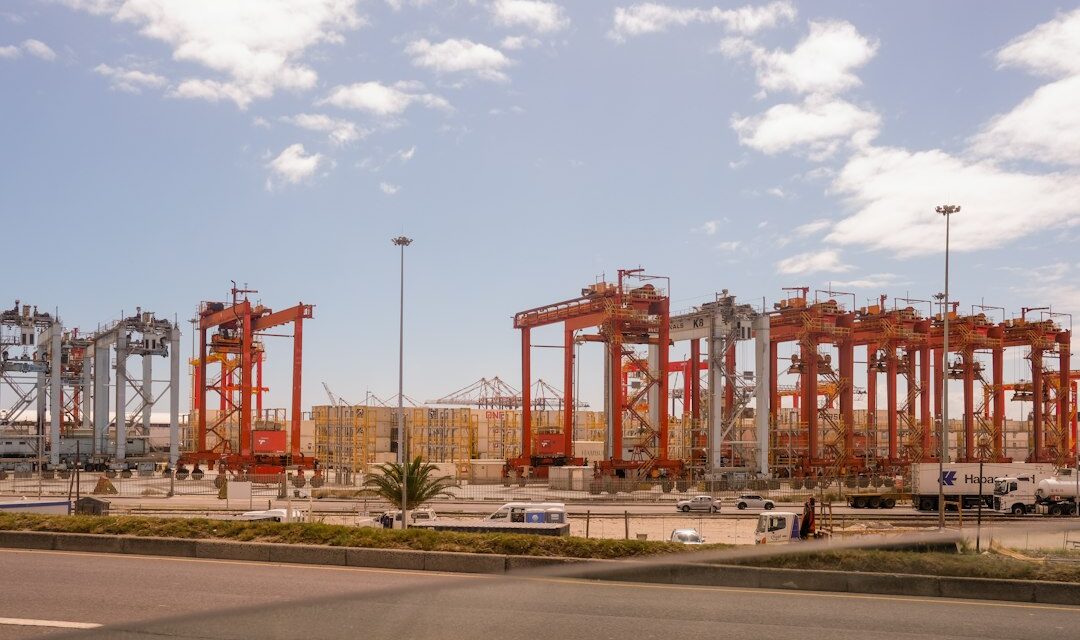
China is Nigeria’s largest trading partner. Two-way trade reached $21.89bn in 2024: $18.9bn of Chinese exports and $2.99bn of imports from Nigeria. In January–October 2025 it hit $22.3bn, up 30.4%. For Chinese traders the opportunities cluster in three places: the Lekki Free Trade Zone in Lagos, the Ogun–Guangdong Free Trade Zone, and the wholesale malls and markets of Lagos.
China–Nigeria trade at a glance
Key points
- Chinese exports to Nigeria hit a record $24.9bn in 2025 (BusinessDay, citing China’s National Bureau of Statistics).
- According to Chinese Ambassador Yu Dunhai, trade in H1 2026 was about $18bn, up about 35%.
- Nigeria has 42+ private and 2 public free zones with 500+ registered enterprises, regulated by NEPZA.
- Under the 2025 tax law, a zone enterprise selling more than 25% of its output domestically pays full tax.
- Imports normally need a Form M, a SONCAP certificate and a PAAR.
China–Nigeria trade in numbers
| Period | Measure | Value | Source |
|---|---|---|---|
| 2024 | Total trade | $21.89bn (−2.9%) | MOFCOM country guide |
| 2024 | Chinese exports / imports | $18.9bn / $2.99bn | MOFCOM country guide |
| Jan–Oct 2025 | Total trade | $22.3bn (+30.4%) | NAN, citing MOFCOM |
| 2025 | Chinese exports to Nigeria | $24.9bn (record) | BusinessDay |
| H1 2026 | Total trade | About $18bn (+35%) | Chinese ambassador |
Chinese exports are mainly consumer electronics, textiles, building materials, industrial inputs and heavy machinery. The trade gap is wide, and Nigeria wants to sell more to China. In March 2026 the government was negotiating to expand the yuan–naira currency swap to as much as $10bn.
The two Chinese-run free zones
Lekki Free Trade Zone (Lagos) is owned by CCECC, CRCC, the China-Africa Development Fund and Nanjing Jiangning. It covers a planned 30 km² and sits 3 km from Lekki Deep Sea Port. By October 2025 it had 134 signed firms, 66 of them operating. The $1.6bn Lekki Deep Sea Port was built by CHEC, which holds about 52.5%.
Ogun–Guangdong Free Trade Zone (Igbesa, Ogun State) is a joint venture between Ogun State and CAIC (82%). It is planned at 100 km², with about 10 km² developed, and has 170+ registered firms, over $2bn of investment, annual turnover above $1bn and nearly 10,000 direct jobs.
Zone enterprises get relief from company income tax, VAT and duty on imported equipment, free repatriation of profits and Expatriate Quota waivers. But zone enterprises in a multinational group or with turnover above ₦20bn face a 15% minimum effective tax rate. Entry requirements, incentives and the new tax rules are covered in our guide to Nigeria’s free trade zones.
Wholesale malls and markets
China Town in Ojota, Lagos, is the best-known Chinese mall: a pink complex with a red archway selling clothing, shoes, electronics, kitchenware and Chinese food, with a Chinese supermarket, a Chinese-staffed clinic and apartments. On Sundays Chinese residents from across Lagos come to shop. Other malls include Old and New Dragon City and Jinmao. In September 2026 some local traders at the Lagos Trade Fair market protested against Chinese merchants, chiefly over Chinese wholesalers selling directly to retail buyers. If you trade wholesale, keep your permits complete and look after relationships with local distributors.
Import and export basics
- Check the goods are not on the Customs import prohibition list (for example frozen poultry or bagged cement).
- Get a tax ID for the company and register on the Single Window trade portal.
- Apply for an electronic Form M through an authorised dealer bank, stating whether it is valid for official forex.
- Obtain a Product Certificate and SONCAP certificate through an SON-accredited firm such as SGS or Cotecna; food and drugs also need NAFDAC approval.
- The bank submits the PAAR (Pre-Arrival Assessment Report). After Customs approves it, you declare the goods, pay duty and collect them.
For taxes see our guide to the 2026 Nigeria Tax Act, and for payments and currency see the naira exchange guide.
Common questions at a glance
Where should a small goods trader register? If you mainly sell in Nigeria, an onshore company is usual; for processing and export, consider a free zone. See the company registration guide. Are there trade fairs for finding buyers? A China Commodities Expo is due in Lagos on 3–5 November 2026, with more than 250 Chinese manufacturers expected.
Sources
- 商务部《对外投资合作国别(地区)指南·尼日利亚(2025年版)》
- NAN: X-raying China–Nigeria relations in 2025
- BusinessDay: China–Nigeria exports reach record $24.9bn
- Guardian Nigeria: China Commodities Expo to deepen commercial ties (Oct 2026)
- BusinessDay: FG pushes $10bn naira–yuan swap deal (Mar 2026)
- Mondaq: Free trade zones in Nigeria – legal framework and incentives
- BusinessDay: CHEC now holds 52.5% stake in Lekki Port
- HKTDC: Nigerian free trade zone set to grow after decade
- Mondaq: Regulatory procedure for importation of goods into Nigeria
- China Global South / AFP: A walk through Lagos’s China Town (May 2026)
- Sahara Reporters: Lagos traders protest at Trade Fair market (Sep 2026)
In this section
FAQ
How big is China–Nigeria trade?
$21.89bn in 2024; January–October 2025 reached $22.3bn, up 30.4% year on year.
Which free zones in Nigeria are Chinese-run?
Mainly the Lekki Free Trade Zone in Lagos and the Ogun–Guangdong Free Trade Zone at Igbesa, Ogun State.
Can a free zone enterprise sell into Nigeria?
Yes, but under the 2025 tax law an enterprise selling more than 25% of its output domestically pays full company tax on all its profit.
What documents do imports into Nigeria need?
Usually an electronic Form M, a SONCAP certificate from an SON-accredited firm and a PAAR; food and drugs also need NAFDAC approval.
Facts checked: 2026-10-22 · Niriliya Huaren Editorial Team · How we check facts