
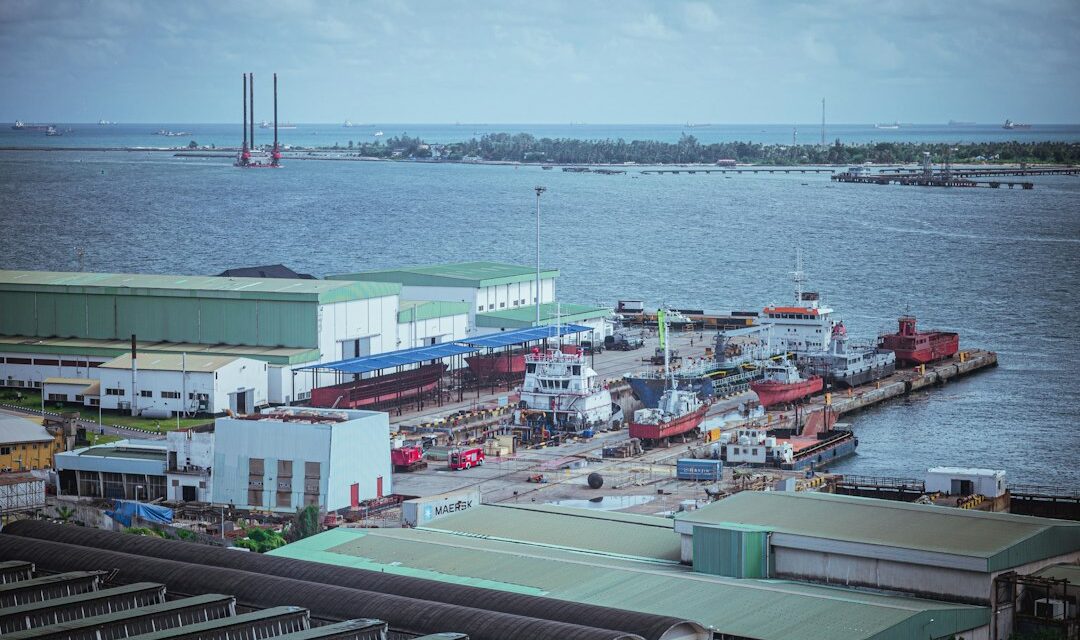
Nigeria’s free trade zones are regulated by two bodies. The Nigeria Export Processing Zones Authority (NEPZA) covers industrial, manufacturing, logistics and tech zones, and the Oil and Gas Free Zones Authority (OGFZA) covers oil and gas zones. A licensed Free Zone Enterprise (FZE) is exempt from federal, state and local taxes, imports equipment and inputs duty-free, can repatriate profits and capital freely, and does not need an expatriate quota. Chinese investment is concentrated in the Lekki Free Trade Zone in Lagos and the Ogun–Guangdong Free Trade Zone in Ogun State.
The new tax law in force since 1 January 2026 adds limits: zone enterprises that sell more than 25% into the domestic market, or that belong to large multinational groups, lose part of the benefit.
Lekki FTZ vs Ogun–Guangdong FTZ
| Row | Lekki | Ogun |
|---|---|---|
| Location | Ibeju-Lekki, Lagos; 3 km from deep-sea port | Igbesa, Ogun State |
| Planned area | 30 km² | 100 km² (~10 developed) |
| Firms | 134 signed, 66 operating (Oct 2025) | 170+ registered |
| Investment | — | Over US$2bn |
| Annual turnover | — | Over US$1bn |
| Direct jobs | — | Nearly 10,000 |
Key points
- Scale: NEPZA’s chief said in June 2026 that Nigeria has 63 licensed zones, about 40 operational, hosting more than 900 enterprises.
- Two regulators: NEPZA (NEPZA Act 1992) and OGFZA (Oil and Gas Export Free Zone Act 1996), each running a one-stop approval process.
- Lekki FTZ: 30 km² planned, 3 km from Lekki Deep Sea Port; 134 signed and 66 operating firms as of October 2025.
- Ogun–Guangdong FTZ: 170+ registered firms, over US$2 billion invested, annual turnover above US$1 billion, nearly 10,000 direct jobs.
- Entry rules: NEPZA requires minimum share capital of US$100,000, more than one director, and no prior CAC registration.
- New tax rules: domestic sales above 25% of total sales mean full domestic tax on all profits; MNE members or firms with turnover above ₦20 billion face a 15% minimum effective rate.
Who regulates the zones
The legal basis is the Nigeria Export Processing Zones Act 1992 and the Oil and Gas Export Free Zone Act 1996. NEPZA supervises most general-purpose, manufacturing, logistics and digital zones. OGFZA, set up in 1996 and operating from Onne in Rivers State since 2001, oversees oil and gas zones such as the Onne Oil and Gas Free Zone and the Dangote Industries Free Zone inside Lekki FTZ, home to the Dangote refinery, fertiliser and petrochemical plants.
Zones work on a single-window model: company set-up, customs, immigration and tax approvals are handled by the zone authority and the zone management company rather than separate ministries.
The two Chinese-backed zones compared
| Item | Lekki Free Trade Zone | Ogun–Guangdong Free Trade Zone |
|---|---|---|
| Location | Ibeju-Lekki, Lagos State; 3 km from Lekki Deep Sea Port | Igbesa, Ogun State; about 50 km from Lagos |
| Chinese partners | CRCC, CCECC, China-Africa Development Fund, Nanjing Jiangning | China Africa Investment Company (CAIC), 82% of the JV |
| Planned area | 30 km² | 100 km², about 10 km² developed |
| Firms | 134 signed, 66 operating (Oct 2025) | 170+ registered |
| Investment and output | No verified total published | Over US$2bn invested; turnover above US$1bn a year |
| Jobs | No verified figure | Nearly 10,000 direct |
| Main activities | Manufacturing, logistics; includes the Dangote oil and gas free zone | Ceramics, glass, packaging, furniture, steel structures, hardware, footwear |
Most figures come from China’s MOFCOM country guide for Nigeria (2025 edition). In November 2025 the News Agency of Nigeria quoted Lekki Free Zone Development Company MD Dai Shunfa as saying that, by June 2025, 134 firms had signed, 65 were operating and 10 were under construction, which is consistent with MOFCOM.
Incentives for zone enterprises
According to NEPZA and law-firm summaries, approved FZEs generally get:
- Exemption from federal, state and local taxes, rates and levies, including company income tax, capital gains tax and VAT on qualifying in-zone transactions
- No withholding tax on dividends
- Repatriation of capital, profits and dividends at any time
- 100% duty exemption on imported machinery, equipment and production inputs; duty-free storage
- No import or export licences
- 100% foreign ownership, freedom to hire foreign managers and specialists, and expatriate quota waivers
- Rent-free land during construction
- Up to 100% of output may be sold into Nigeria with a permit and the applicable duties
What the 2026 tax law changes
The Nigeria Tax Act 2025, effective 1 January 2026, narrows the benefit:
- The 25% rule. An FZE that sells more than 25% of total sales into the customs territory (the domestic market) pays full domestic company tax on all its profit.
- 15% minimum rate. FZEs that are part of a multinational group or have turnover above ₦20 billion face a 15% minimum effective tax rate.
- Exporters. Entities whose profits come entirely from exports stay fully exempt; smaller firms with at least 75% export sales get proportional relief.
For Chinese factories selling mainly to Nigerian customers, this significantly reduces the advantage of a zone location, so model the numbers before you choose a site. See our Nigeria Tax Act 2026 guide.
How to set up in a zone
- Pick a zone that suits your sector and market; some zones accept only certain activities.
- Talk to the zone management company about land, factory or office space.
- Prepare the application: NEPZA Form 1, directors and share allotment (Form 2), MEMART, board resolutions, business description, directors’ passports and photos, a lawyer’s declaration of compliance (Form 3), a feasibility study, and where relevant an infrastructure plan, environmental impact assessment and sector certificate for oil and gas.
- Meet the capital and director rules: US$100,000 minimum share capital and at least two directors.
- Receive the FZE licence from the authority or zone management, then renew the operating licence annually.
- Bring in capital through a bank so profits can be repatriated, and arrange entry permits for any foreign staff.
NEPZA says an FZE does not need prior CAC registration. If you also want to trade outside the zone, you will need a separate CAC company registration. Zone enterprises are exempt from quotas, but individual staff still need the right visa; see our STR and CERPAC guide and expatriate quota guide.
Who should consider a zone
- Export-oriented manufacturers serving West Africa and beyond get the full package.
- Port logistics and warehousing next to Lekki Deep Sea Port, including bonded storage and re-export.
- Import-substitution plants in ceramics, building materials and packaging already cluster in Ogun–Guangdong, but watch the 25% domestic-sales threshold.
More trade and investment news in our trade and free zones section.
Sources
- Nigeria Export Processing Zones Authority (NEPZA)
- NEPZA FAQ: licences, entry requirements and incentives
- OGFZA: Dangote Industries Free Zone
- The Guardian (Nigeria): Free zones generate $33bn, house 900 enterprises (June 2026)
- Mondaq: Free trade zones in Nigeria, legal framework and incentives
- Mondaq: How to set up a free zone company in Nigeria
- News Agency of Nigeria: Lekki Free Zone Coy MD on progress (November 2025)
- HKTDC: Ogun–Guangdong Free Trade Zone
- MOFCOM country guide: Nigeria (2025 edition), chapter 5 (Chinese)
FAQ
How many free zones does Nigeria have?
NEPZA's chief said in June 2026 that there are 63 licensed zones, about 40 of them operational, with more than 900 enterprises.
What capital does a free zone enterprise need?
NEPZA sets a minimum share capital of US$100,000 and requires more than one director. Prior CAC registration is not needed.
Can zone enterprises sell into Nigeria?
Yes, up to 100% with a permit and duties. But under the 2026 tax law, selling more than 25% domestically means full domestic tax on all profits.
How many companies are in Lekki FTZ?
According to MOFCOM's 2025 country guide, 134 firms had signed and 66 were operating as of October 2025.
Do zone enterprises need an expatriate quota?
Zone enterprises benefit from quota waivers, but individual Chinese staff still need the appropriate visa and residence paperwork.
Facts checked: 2026-10-22 · Niriliya Huaren Editorial Team · How we check facts